How the operation works
What wears out in the knee, what is replaced, what the implant is made of and how the day of surgery goes.
All pictures are diagrams. There is no blood and no surgery video here.
Author: Bagrat DzhavakhyanTreatment navigator, portal author
Not yet reviewed by a physicianSources: Russian Ministry of Health guidelines 2024, NHS, AAOS[1, 3, 5]1Total Knee Replacement — AAOS OrthoInfo, 20243Клинические рекомендации «Гонартроз» — Минздрав России, 20245Knee replacement — NHS, 2024To the list of sources →
Scene 1 of 4. Cartilage and arthritis
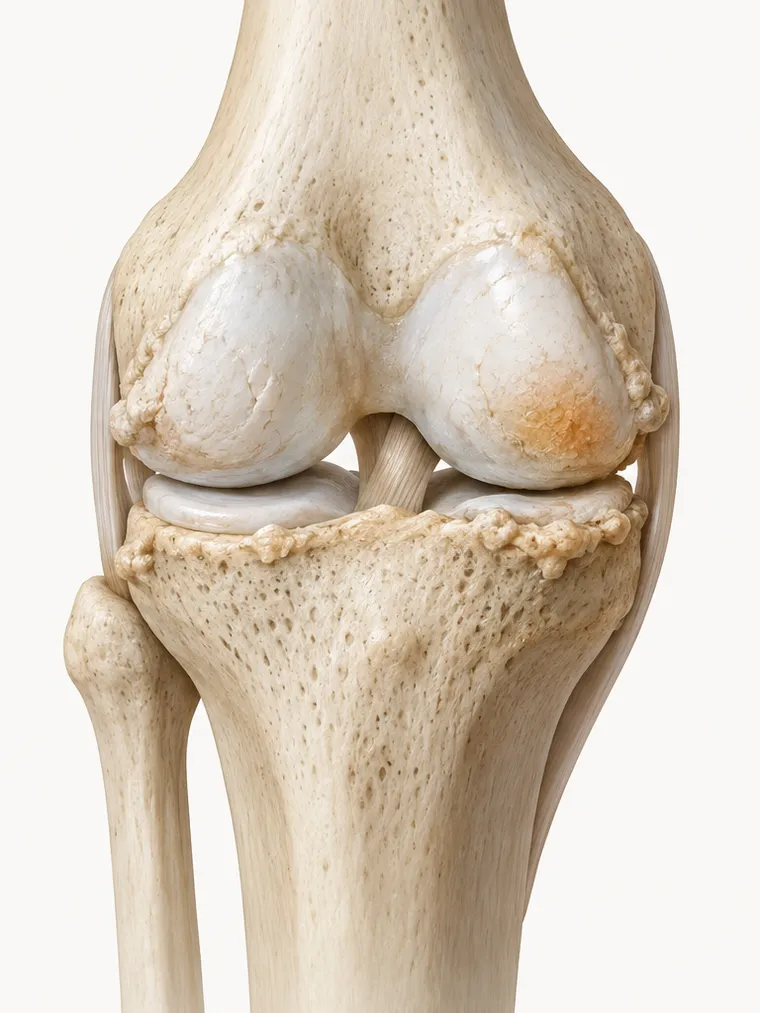
Compare two states of the same joint: “Healthy joint” and “Arthritis”.
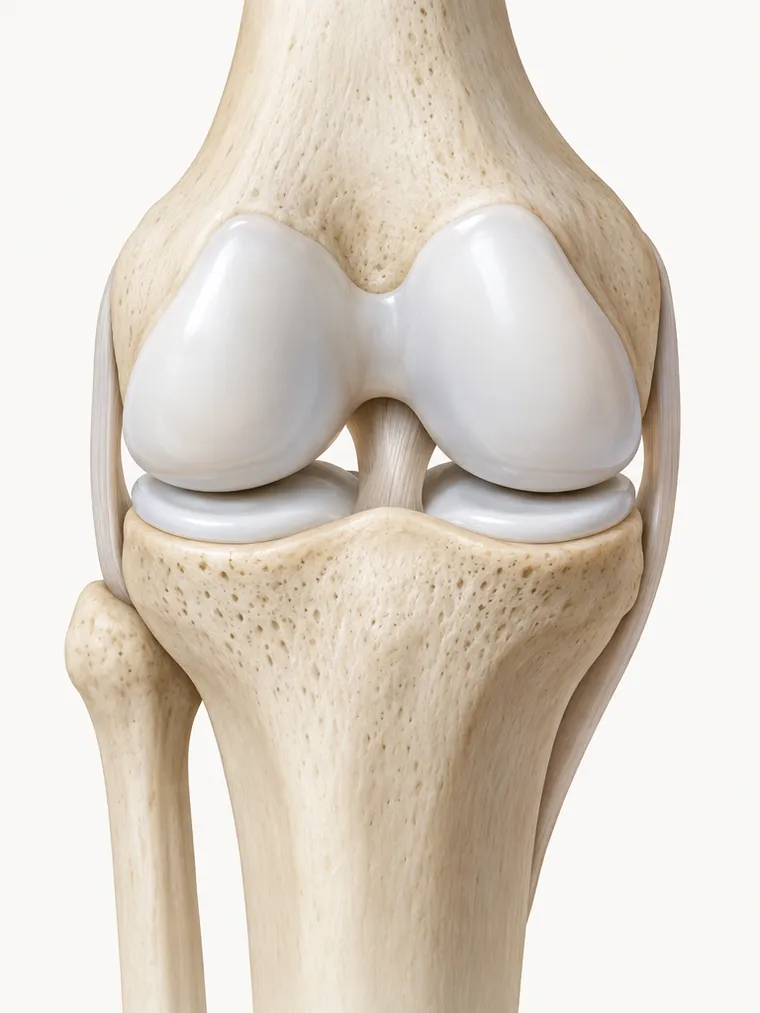
Healthy joint
Smooth cartilage covers the joint surfaces of the bones. On an X-ray there is an even joint space between the bones.[1, 3]1Total Knee Replacement — AAOS OrthoInfo, 20243Клинические рекомендации «Гонартроз» — Минздрав России, 2024To the list of sources →
Arthritis
The cartilage is thinner. On an X-ray the joint space is narrower, with bony outgrowths at the edges.[1, 3]1Total Knee Replacement — AAOS OrthoInfo, 20243Клинические рекомендации «Гонартроз» — Минздрав России, 2024To the list of sources →
Cartilage can thin gradually. How much it gets in the way is judged by the doctor from your symptoms, an examination and an X-ray.[3]3Клинические рекомендации «Гонартроз» — Минздрав России, 2024To the list of sources →
Scene 2 of 4. What is replaced
Four steps on one diagram. Press “Next”.
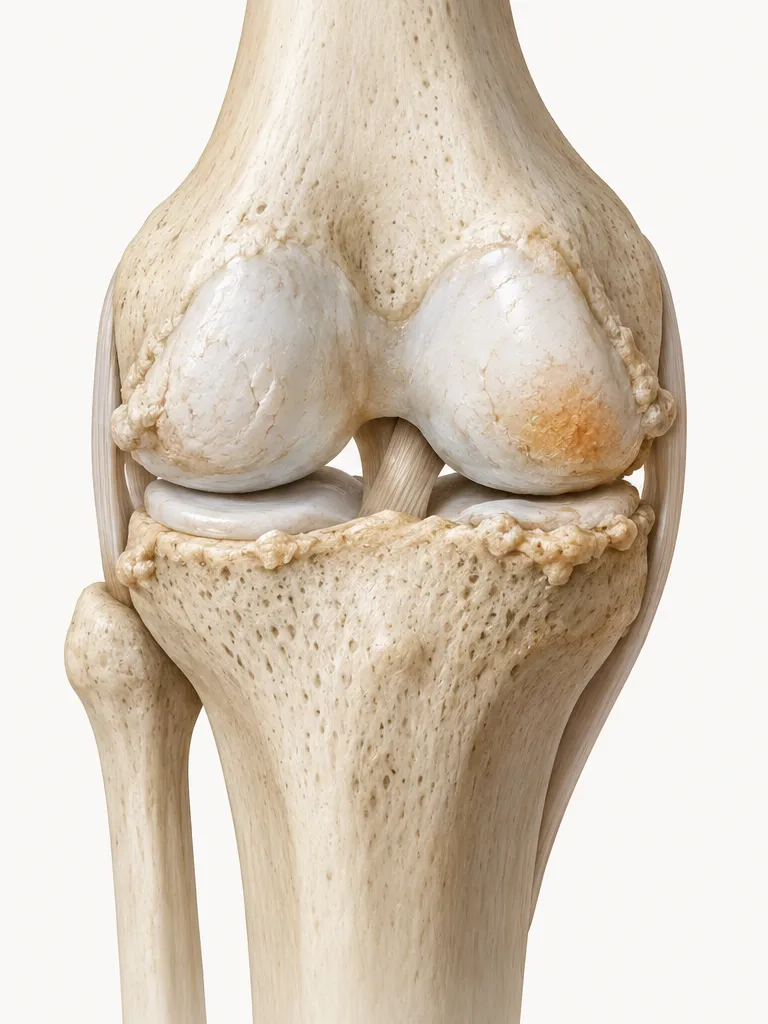
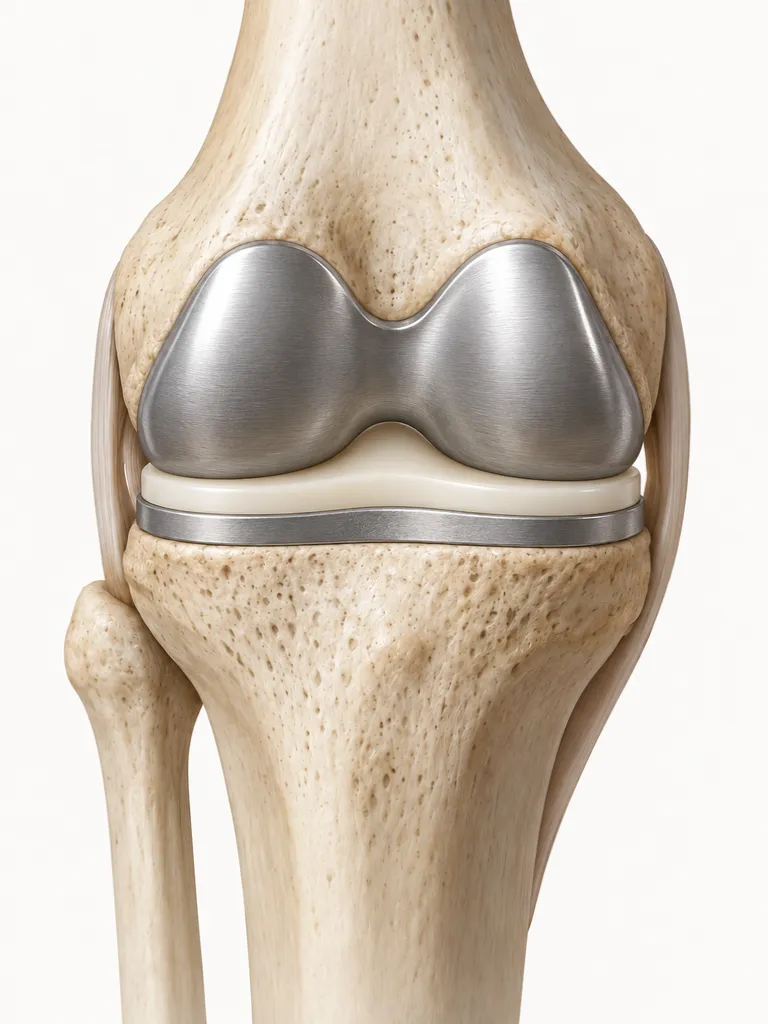
Left: a knee with arthritis, the surfaces that are removed are hatched. Right: a schematic implant on the same knee.
Where the wear is
The cartilage on the ends of the bones has thinned. The gap between the thigh bone and the shin bone has narrowed. Bony outgrowths have formed at the edges.[1, 3]1Total Knee Replacement — AAOS OrthoInfo, 20243Клинические рекомендации «Гонартроз» — Минздрав России, 2024To the list of sources →
What is removed
The worn cartilage and a thin layer of bone beneath it are removed. This prepares the surfaces for the implant parts.[1]1Total Knee Replacement — AAOS OrthoInfo, 2024To the list of sources →
What stays your own
Most of the thigh bone and shin bone stays your own, and usually the collateral ligaments too. The implant does not replace muscles; they are not drawn here. The anterior cruciate ligament is usually removed, the posterior one depending on its condition and the implant design.[2, 4]2Knee Replacement Implants — AAOS OrthoInfo, 20244Cruciate-retaining versus posterior-stabilized total knee arthroplasty: revision rates in the Dutch Arthroplasty Register (LROI) — The Journal of Arthroplasty, 2020To the list of sources →
- Thigh bone
- Shin bone
- Collateral ligaments
What the implant covers
The ends of the thigh bone and shin bone are covered with metal parts. A polyethylene insert goes between them.[2]2Knee Replacement Implants — AAOS OrthoInfo, 2024To the list of sources →
The implant replaces the worn joint surfaces. The parts it is made of are in the next scene.[2]2Knee Replacement Implants — AAOS OrthoInfo, 2024To the list of sources →
Scene 3 of 4. What the implant is made of
A knee implant is made of several parts. Press “Next” and the main parts move into place one by one.
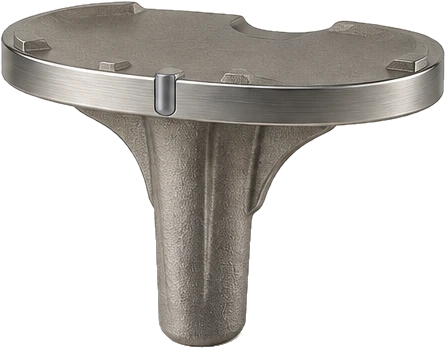
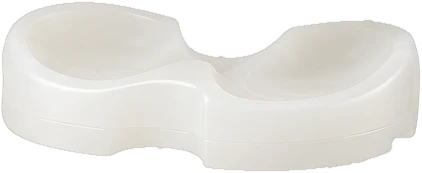
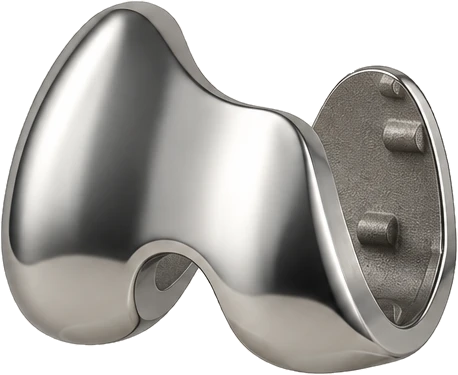
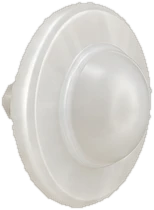
Tibial component
A metal base covers the prepared top of the shin bone. Its keel goes into the bone and helps hold the part in place.[2]2Knee Replacement Implants — AAOS OrthoInfo, 2024To the list of sources →
Insert
A polyethylene insert sits on the metal base. The femoral component glides on its smooth surface, and the load passes through it.[2]2Knee Replacement Implants — AAOS OrthoInfo, 2024To the list of sources →
Femoral component
A metal component covers the end of the thigh bone. The metal parts are fixed with bone cement or without it, in which case the bone grows into their surface.[2]2Knee Replacement Implants — AAOS OrthoInfo, 2024To the list of sources →
Kneecap button — not always used
Sometimes the back of the kneecap is covered with a polyethylene button. The surgeon decides whether it is needed.[1]1Total Knee Replacement — AAOS OrthoInfo, 2024To the list of sources →
This is the assembled implant. The size and design are chosen to fit the knee.[2]2Knee Replacement Implants — AAOS OrthoInfo, 2024To the list of sources →
Scene 4 of 4. The day of surgery
Five stages of one day. The order and timing differ from hospital to hospital.
Before surgery
Admission
The ward will explain in advance when to stop eating and drinking.[1, 5]1Total Knee Replacement — AAOS OrthoInfo, 20245Knee replacement — NHS, 2024To the list of sources →
For the patient: The anaesthetist will ask about your medicines and allergies.
For the family member: Ask the ward when and on which number you can find out how the operation went.
Before the operation
Anaesthesia
The type of anaesthesia is discussed with the anaesthetist.[1, 3]1Total Knee Replacement — AAOS OrthoInfo, 20243Клинические рекомендации «Гонартроз» — Минздрав России, 2024To the list of sources →
For the patient: Spinal anaesthesia is often used: an injection in the back numbs the legs.
For the family member: Visiting rules differ between hospitals. Find them out in advance.
1–2 h
The operation
The surgeon removes the worn surfaces and fits the implant.[1]1Total Knee Replacement — AAOS OrthoInfo, 2024To the list of sources →
For the patient: What the implant parts look like is shown in the scene “What the implant is made of”.
For the family member: Preparation and monitoring after the operation take extra time. Find out in advance when and how the ward will tell you how it went.
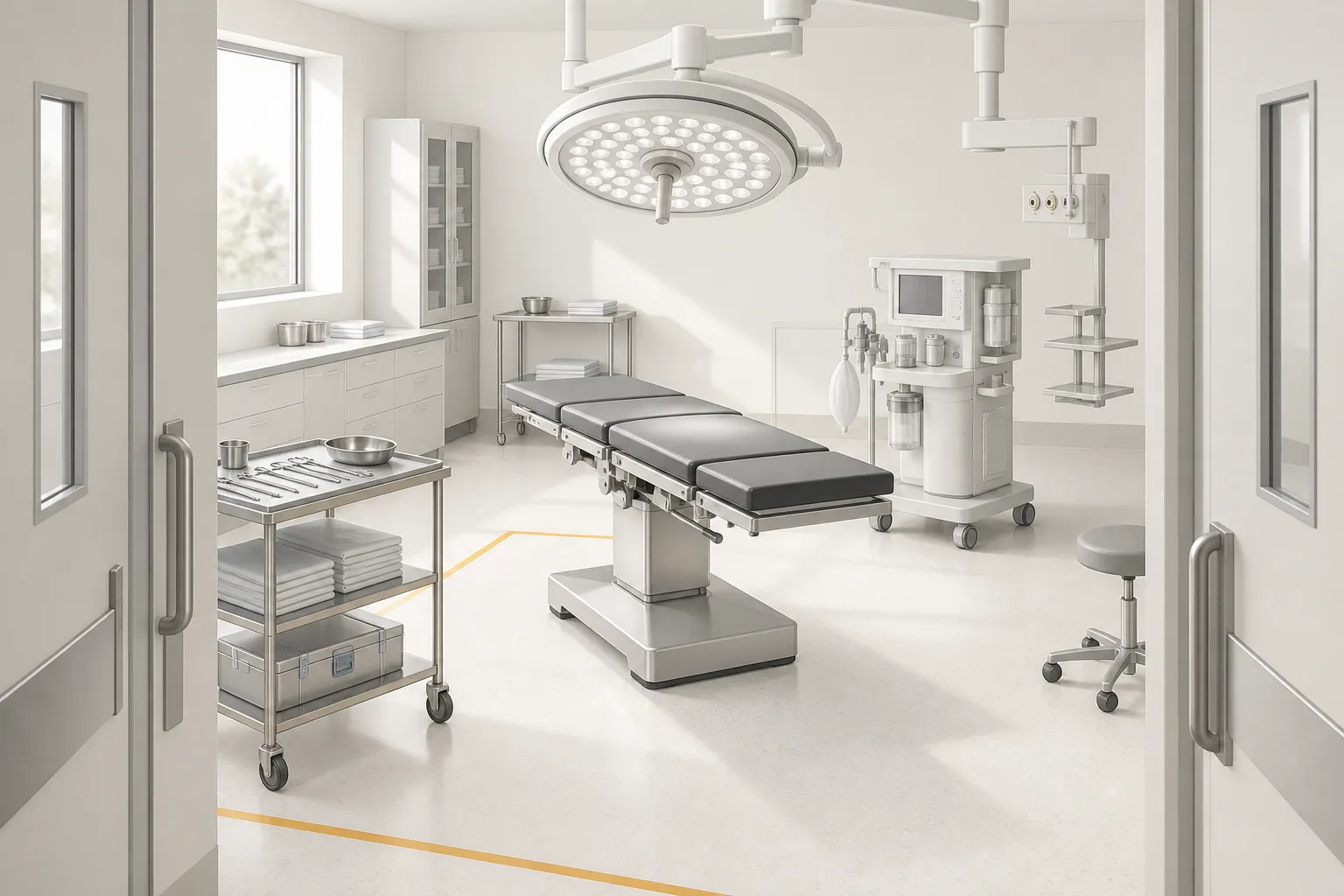
Schematic illustration: an operating theatre with no people The first hours after the operation
Recovery room
While the anaesthesia wears off, staff keep watch.[1, 5]1Total Knee Replacement — AAOS OrthoInfo, 20245Knee replacement — NHS, 2024To the list of sources →
For the patient: If you are in pain, tell the staff: pain relief can be adjusted.
For the family member: In the first hours a person is drowsy. Whether you can talk, and for how long, depends on how they feel and on the ward rules.
Usually on the day of surgery or the next day
First steps
The care team will say when to get up.[1, 6]1Total Knee Replacement — AAOS OrthoInfo, 20246Эндопротезирование сустава в России: сроки госпитализации и стоимость — russianhospitals.ru, 2026To the list of sources →
For the patient: The first steps are taken with support and supervision. The care team sets the discharge date; in Russian hospitals it is usually day 4–10.
For the family member: Before discharge, clear away loose rugs. Discuss grab rails and seat height with the rehabilitation team.

The first days are spent in hospital.[6]6Эндопротезирование сустава в России: сроки госпитализации и стоимость — russianhospitals.ru, 2026To the list of sources → What comes next is in the chapter “Recovery”
Prepare for the appointment
Tick questions for the surgeon at the end of each scene. They are collected in the memo.