Robotic joint replacement
What the robot does in surgery, what research has proven, where systems exist in Russia and what it costs
Author: Bagrat DzhavakhyanTreatment navigator, portal author
Not yet reviewed by a physicianSources:[1, 2, 3]1Robotic-assisted total knee arthroplasty: precision versus patient-level outcomes — critical review — PMC, 20262Robotic-arm assisted versus conventional total knee replacement (RACER-Knee): a randomised controlled trial — The Lancet, 20263Robot-assisted surgery for soft tissue procedures and orthopaedic procedures (HTE22) — NICE, 2025To the list of sources →
Your route: Back to your route
In brief
- The robot makes no decisions: it keeps the instrument within the surgeon's plan.
- Placement precision is higher, which is proven. No difference in pain or function at one year was found (RACER-Knee).
- Self-pay starts at 650,000 roubles; some state centres use the robot under a VMP quota.
- The surgeon's experience matters as much as the technology. Choosing a system often means choosing an implant brand.
1Understand
Proven
Placement accuracy on X-rays [1]1Robotic-assisted total knee arthroplasty: precision versus patient-level outcomes — critical review — PMC, 2026To the list of sources →
No difference found
Pain and function at one year [2]2Robotic-arm assisted versus conventional total knee replacement (RACER-Knee): a randomised controlled trial — The Lancet, 2026To the list of sources →
No data
Implant lifespan [3]3Robot-assisted surgery for soft tissue procedures and orthopaedic procedures (HTE22) — NICE, 2025To the list of sources →
The robot and the surgeon
In joint replacement the robot is a computer-controlled tool. Clinics write that the robot operates, yet it makes no clinical decisions.
The surgeon does the essential work: examines you, chooses the operation and implant, makes the incision, prepares the bone and fits the implant. In most systems the robot has one job: keeping the instrument within a plan made in advance. Active systems such as CUVIS-joint mill the bone themselves, under the surgeon’s constant control[1]1Robotic-assisted total knee arthroplasty: precision versus patient-level outcomes — critical review — PMC, 2026To the list of sources →.
The computer knows where the bone cut should go. If the surgeon’s hand drifts, the instrument slows or stops. This removes random errors; it does not replace the surgeon’s experience.
The surgeon guides the saw. The system limits its movement to the plan.
A simplified illustration of a system in which a robotic arm limits how the saw can move. Not every robot works this way.
Skip the animation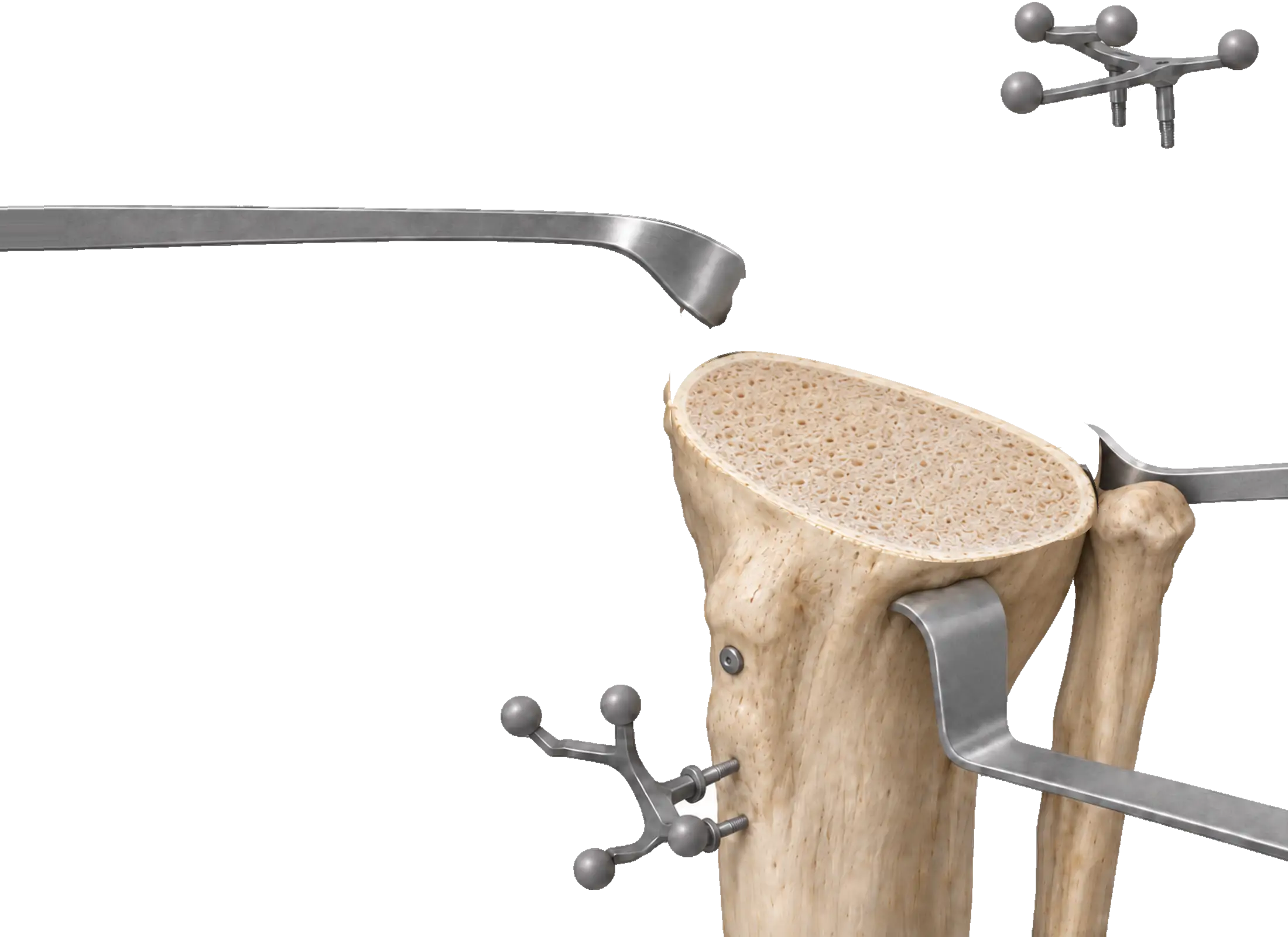
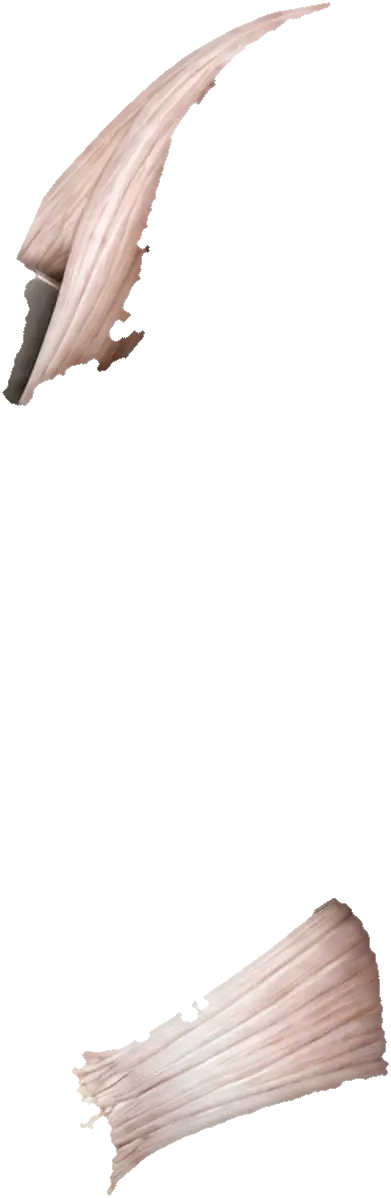
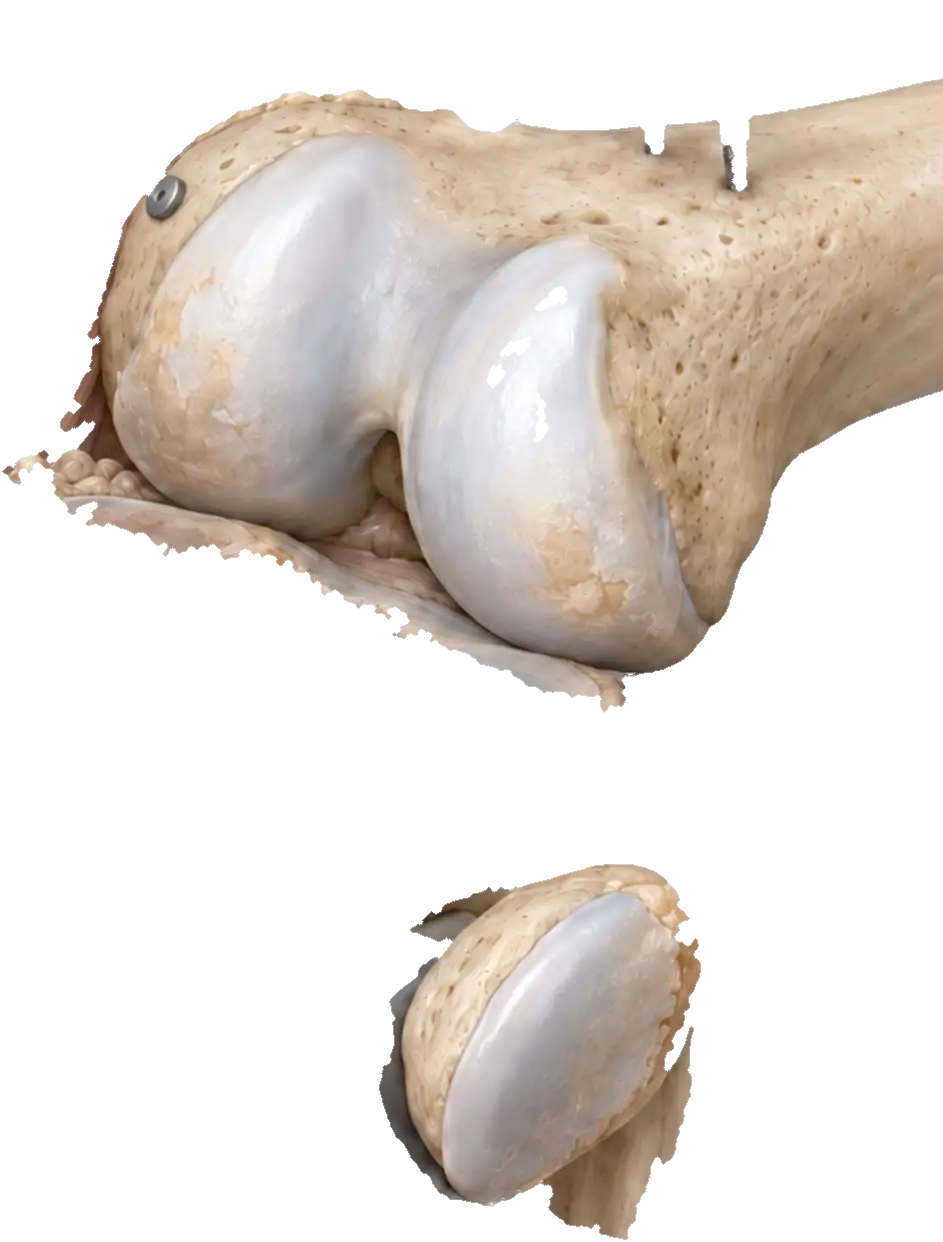

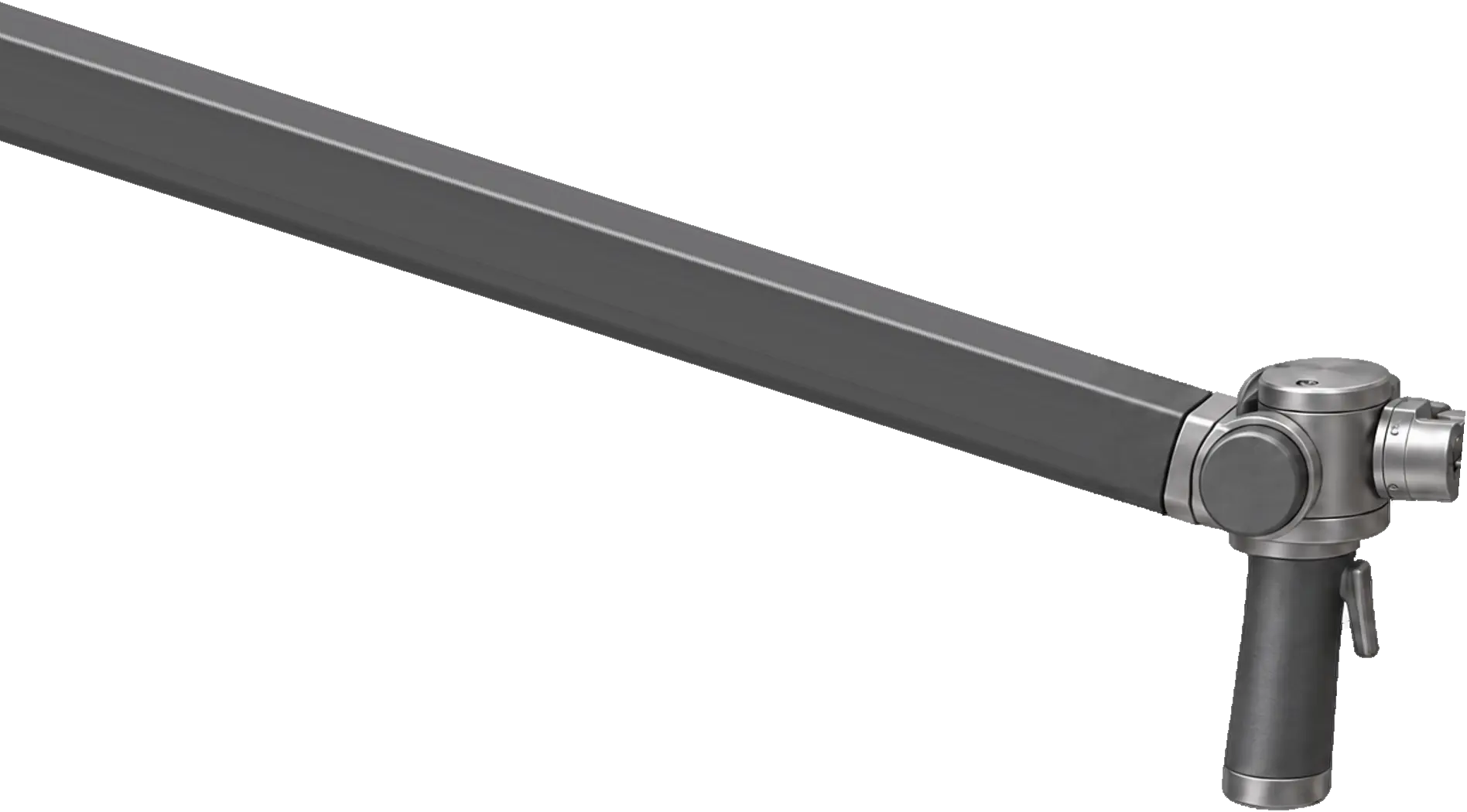
All 7 steps
- Plan. Using scans, the surgeon plans the implant position and the level of the cut.
- Bone check. The surgeon matches the bone to the model with a probe, then checks the ligaments and refines the plan.
- Boundary. From the plan the surgeon approved, the system sets a boundary for the saw.
- Saw approach. The surgeon brings in the saw on the robotic arm. Retractors hold the ligaments aside.
- The cut. The surgeon guides the saw in several passes within the cutting plane.
- The stop. At the plan boundary, the system limits how the saw can move. The surgeon protects ligaments and soft tissues.
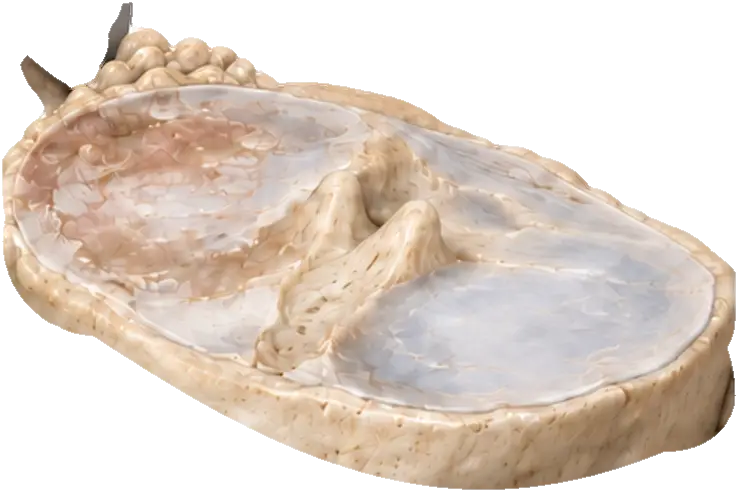
- Checking. After the layer is removed, the surgeon checks the cut. Further passes and lifting out the layer are not shown.
An illustration, not a photo of surgery. The skin incision, the hands of the surgeon and assistant, sterile covers, the camera and the robot itself are not shown, only the end of the arm. The thigh bone, the ligaments and, during the cut, the top layer of bone are shown see-through, and the camera markers are drawn smaller; lifting out the cut layer of bone is not shown. The steps are shortened: the saw makes more passes in reality, matching the bone to the model and checking the ligaments take longer, and surgeons cut in different orders. This version of the operation removes the cruciate ligaments. A screen cannot convey force, so the stop is shown with movement and words.
The robot helps carry out the implant plan more precisely. In the RACER-Knee trial (339 patients), no additional improvement in pain or function over conventional surgery was found at one year. There is no evidence yet that implants placed with a robot last longer.
Watch from the startA teaching illustration of the shin-bone cut in a knee replacement with a robotic arm. The knee is bent; the thigh bone and ligaments are shown see-through. Markers on pins in the thigh bone and shin bone let a camera track where the bones are. First the surgeon uses scans to plan the implant position and the level of the cut. The surgeon then matches the bone to the model with a probe, checks the ligaments and refines the plan. From the approved plan, the system sets a virtual boundary for the saw. The surgeon brings in the saw on the robotic arm while retractors hold the ligaments aside, and guides it in several passes within the cutting plane. At the plan boundary, the system limits how the saw can move. The surgeon withdraws the saw; after the cut layer of a few millimetres is removed, the surgeon checks the flat cut surface.
The operation step by step
For you, a robotic operation looks almost the same as a standard one. The anaesthesia, the incision and the implant are the same[4]4Total Knee Replacement — AAOS OrthoInfo, 2024To the list of sources →. The preparation and a few steps in the operating room differ.
How robotic-assisted surgery works
The robot makes no clinical decisions of its own. It helps carry out the surgeon’s plan to within a millimetre and a degree.
Step 1. Planning
A 3D model of the joint is built from a CT scan (or from landmarks during surgery) and the surgeon sets the component positions.
Step 2. Registration
Trackers are fixed to the bones in theatre and the system matches the model to the real joint.
Step 3. Executing the plan
The saw or burr works only within the planned boundary: the robotic arm holds the tool, the surgeon guides it.
Step 4. Balance check
With trial components in place the system measures ligament tension through bending and straightening; the surgeon refines the plan if needed.
Step 5. Verification
The system shows deviations and the final component position before the wound is closed.
In the RACER-Knee trial the robotic operation took about 10 minutes longer on average[16]16Robotic-assisted knee replacement no better for patients than conventional surgery (RACER-Knee press release) — University of Warwick, 2026To the list of sources →. While the surgeon is learning the system, the difference can be greater[1]1Robotic-assisted total knee arthroplasty: precision versus patient-level outcomes — critical review — PMC, 2026To the list of sources →. Recovery is the same as after standard surgery: walking with support in the first days, discharge after a few days[4]4Total Knee Replacement — AAOS OrthoInfo, 2024To the list of sources →.
Classes of systems
Robots for joint replacement differ in how they work. We group them into four classes, plus augmented-reality navigation. NICE has included five systems in its UK evidence-generation programme: Mako, ROSA, VELYS, CORI and SkyWalker[3]3Robot-assisted surgery for soft tissue procedures and orthopaedic procedures (HTE22) — NICE, 2025To the list of sources →.
Four classes of systems
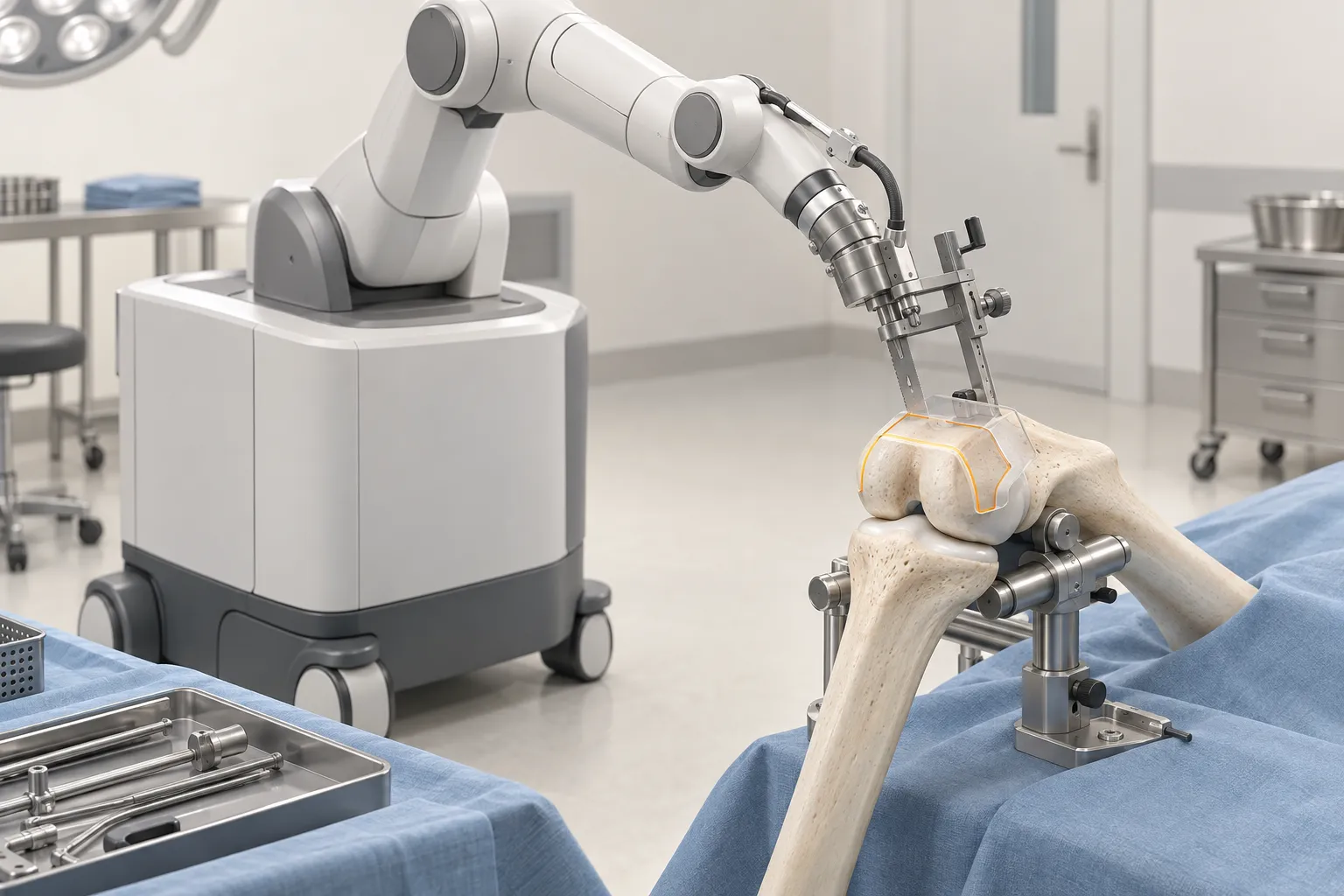
Arm with haptic boundary
The surgeon guides the tool; the robotic arm physically stops it at the planned boundary.
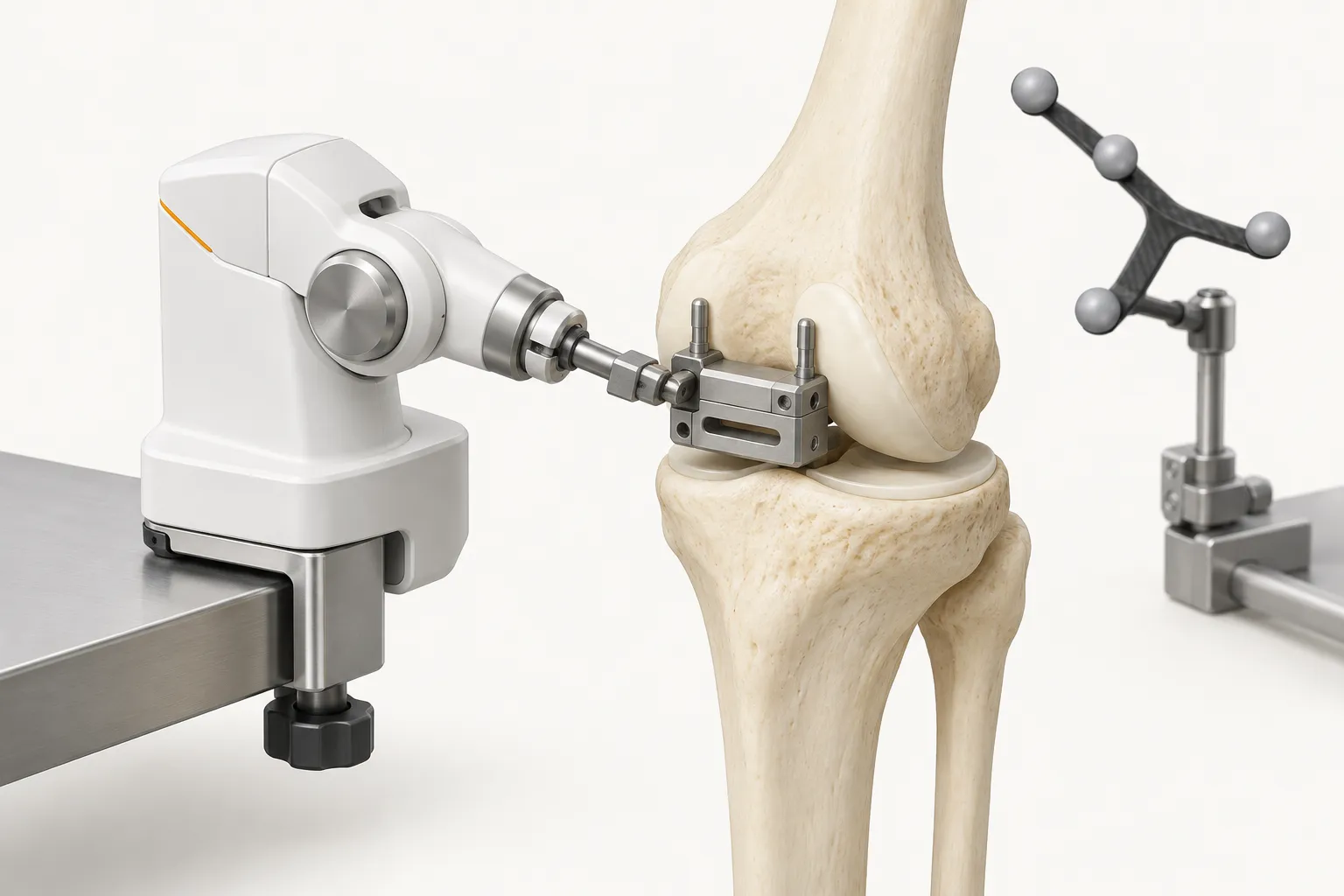
Cutting-guide positioner
The robot places the cutting guide exactly per plan; the surgeon saws by hand.
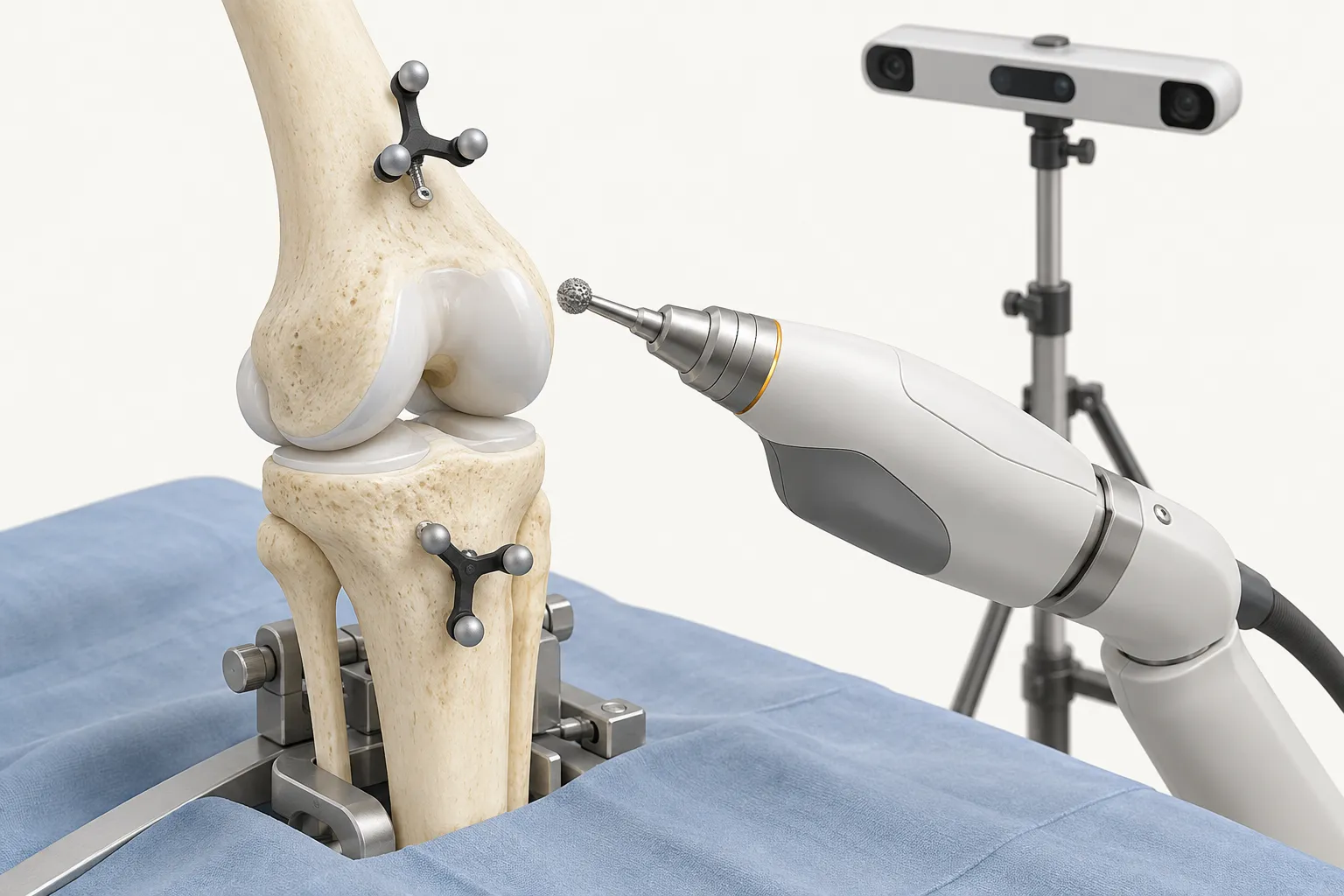
Handheld mini-robot
A compact tool with optical tracking: the burr stops outside the planned volume.
Active robot
The robot mills the bone itself according to the plan under the surgeon’s supervision; it makes no clinical decisions of its own.
schematic illustration
Most systems work only with their maker’s implants, so choosing a system often means choosing the implant brand. Check compatibility with the clinic.
Show all 10 systemsCollapse the table
Systems in use worldwide
| System | Maker | Class | Planning | Joints | Implants | In Russia |
|---|---|---|---|---|---|---|
| Mako SmartRobotics (Mako 4)The most studied system | Stryker, USA | Arm with haptic boundary | CT-based | Hip, knee (total and partial), hip revision | Stryker implants only | yes |
| ROSA Knee / ROSA Hip | Zimmer Biomet, USA | Cutting-guide positioner | CT or imageless | Knee, hip (anterior approach) | Zimmer Biomet implants only | no |
| VELYS | DePuy Synthes (J&J), USA | Cutting-guide positioner | imageless | Knee (total and partial); hip — navigation | ATTUNE for total, SIGMA HP for partial replacement (DePuy); availability of the specific version in Russia to be confirmed | yes |
| CORI / CORI XT | Smith+Nephew, UK | Handheld mini-robot | imageless | Knee (incl. partial and revision), hip — navigation | Smith+Nephew implants only | yes |
| TMINI | THINK Surgical, USA | Handheld mini-robot | CT-based | Knee | Open platform (several makers) | no |
| ExcelsiusFlex | Globus Medical, USA | Cutting-guide positioner | CT or imageless | Knee | Globus implants | no |
| OMNIBotics | Corin, UK | Cutting-guide positioner | imageless | Knee | Corin implants | no |
| NextAR | Medacta, Switzerland | AR navigation | CT or imageless | Knee, hip, shoulder | Medacta implants | no |
| SkyWalker | MicroPort MedBot, China | Arm with haptic boundary | CT-based | Knee, hip | MicroPort implants | no |
| CUVIS-jointThe robot mills the bone itself according to the plan | Curexo, South Korea | Active robot | CT-based | Knee | Several makers | yes |
No such systems in Russia yet.
Data verified: 2026-09-12. Sources: NICE, 2025; The Lancet, 2026; PMC, 2026; The Journal of Arthroplasty (PMID 39710214), 2025
The mark for Russia means only that we confirmed the system from open sources. It says nothing about official registration.
Questions about this chapter
Do I need a CT scan before the operation?
It depends on the system. Mako, CUVIS-joint, TMINI and SkyWalker build the plan from a CT scan. CORI, VELYS and OMNIBotics work without CT: the surgeon maps the bone surface with a probe during the operation.
2Proven and unproven
Placement precision
The robot consistently reduces how far the implant sits from the plan. Outliers, implants placed noticeably off target, are fewer with a robot[1]1Robotic-assisted total knee arthroplasty: precision versus patient-level outcomes — critical review — PMC, 2026To the list of sources →. For the hip, a meta-analysis found more accurate cup placement[5]5Robotic versus conventional total hip arthroplasty: systematic review and meta-analysis — The Journal of Arthroplasty (PMID 39710214), 2025To the list of sources →. The result repeats across studies of different quality and is hardly disputed.
Pain and function at one year
In September 2026 The Lancet published the results of RACER-Knee[2]2Robotic-arm assisted versus conventional total knee replacement (RACER-Knee): a randomised controlled trial — The Lancet, 2026To the list of sources →. It is the largest blinded randomised trial of knee replacement with the Mako robot. Patients did not know whether a robot was used. The trial included 339 people[2]2Robotic-arm assisted versus conventional total knee replacement (RACER-Knee): a randomised controlled trial — The Lancet, 2026To the list of sources →.
The main outcome was the Forgotten Joint Score (FJS-12). It measures from 0 to 100 how far a person stops noticing the artificial joint. At 12 months the score was 49.2 with the robot and 50.2 without. The adjusted difference was −1.5 points, p = 0.62[2]2Robotic-arm assisted versus conventional total knee replacement (RACER-Knee): a randomised controlled trial — The Lancet, 2026To the list of sources →. No difference was found on the main outcome. The robotic operation cost more[2]2Robotic-arm assisted versus conventional total knee replacement (RACER-Knee): a randomised controlled trial — The Lancet, 2026To the list of sources →.
For the hip the picture is similar. A 2024 meta-analysis confirmed more accurate placement and found no advantage in clinical scores[5]5Robotic versus conventional total hip arthroplasty: systematic review and meta-analysis — The Journal of Arthroplasty (PMID 39710214), 2025To the list of sources →.
NICE, the British institute, assesses medical technologies for the public health service. In 2025 it allowed robots only while new evidence is collected[3]3Robot-assisted surgery for soft tissue procedures and orthopaedic procedures (HTE22) — NICE, 2025To the list of sources →.
Implant lifespan
Standard implants last a long time: at 25 years about 82 % of knee[6]6How long does a knee replacement last? A systematic review and meta-analysis of case series and national registry reports with more than 15 years of follow-up — The Lancet, 393(10172):655–663, 2019To the list of sources → and about 58 % of hip implants are still working[7]7How long does a hip replacement last? A systematic review and meta-analysis of case series and national registry reports with more than 15 years of follow-up — The Lancet, 393(10172):647–654, 2019To the list of sources →. The younger the patient, the more likely a repeat operation will be needed one day[7]7How long does a hip replacement last? A systematic review and meta-analysis of case series and national registry reports with more than 15 years of follow-up — The Lancet, 393(10172):647–654, 2019To the list of sources →.
Robots have been used widely for less than ten years, so long-term data are scarce[1]1Robotic-assisted total knee arthroplasty: precision versus patient-level outcomes — critical review — PMC, 2026To the list of sources →. There is no evidence that a robot reduces repeat operations[1]1Robotic-assisted total knee arthroplasty: precision versus patient-level outcomes — critical review — PMC, 2026To the list of sources →. Precision may help in theory, yet this remains a hypothesis.
General risks of surgery
The robot does not remove the general risks of joint replacement. Implant infection in the first year after a primary operation occurs in about 1.2–1.3 % of cases[8]8Periprosthetic joint infection after 1.66 million primary and revision arthroplasties (2015–2023) — PMC, 2025To the list of sources →. After repeat operations it is more common, at 6.5–8.8 %[8]8Periprosthetic joint infection after 1.66 million primary and revision arthroplasties (2015–2023) — PMC, 2025To the list of sources →. Russian authors report infection in about 3 % of patients[9]9Эпидемиология эндопротезирования тазобедренного и коленного суставов и перипротезной инфекции в Российской Федерации — Травматология и ортопедия России, 27(3):84–93, 2021To the list of sources →.
Blood clots, dislocation, unequal leg length and stiffness are possible with a robot too. Recovery, restrictions and warning signs are the same. They are covered on the knee and hip pages.
3Where and how much
Clinics with robots
The list shows clinics whose systems we confirmed from open sources. It is incomplete. Check the system, quota options and price with the clinic.
Where robotic systems are available in Russia
Moscow
Priorov National Medical Research Center (CITO)
Three systems in one centre; quota-funded operations available
FNKC FMBA of Russia*
City hospitals No. 31, Demikhov, Yudin*
United Hospital of the Presidential Administration
Yusupov Hospital
European Medical Center (EMC)
Hadassah Medical Moscow
Moscow region
Lapino Clinical Hospital
Surgery ≈ 697k ₽ + CT planning 56.7k + disposables 120k
Saint Petersburg
Pirogov Clinic of High Medical Technologies, St Petersburg University*
All-inclusive price: surgery, anaesthesia, implant, room
Scandinavia and Beloostrov clinics
Novosibirsk
Tsivyan Research Institute of Traumatology and Orthopaedics*
Ufa
Bashkir State Medical University Clinic*
Smolensk
Federal Centre of Traumatology, Orthopaedics and Arthroplasty*
Nizhny Tagil
Tetyukhin Ural Clinical Centre*
Robotic surgery under the state quota not confirmed — check with the clinic
Data verified: 2026-09-12. Availability and prices change — confirm with the clinic. This is not a public offer; OsteoplusX is not affiliated with the clinics listed.
Sources: ЦИТО им. Н. Н. Приорова, 2026; ФНКЦ ФМБА России, 2026; Вестник травматологии и ортопедии им. Н. Н. Приорова, 2025; EMC — Европейский медицинский центр, 2026; Hadassah Moscow, 2026; ГК «Мать и дитя», Клинический госпиталь Лапино, 2026; Клиника высоких медицинских технологий им. Н. И. Пирогова СПбГУ, 2026; Белоостров, ГК «Скандинавия», 2026; Д. А. Чугаев (chugaev.info), 2026; ННИИТО им. Я. Л. Цивьяна, 2023; БГМУ, 2024
How the list was compiled
1 min
The Vreden National Medical Research Centre in St Petersburg did its first robotic knee replacements with CT planning on 2 April 2024[17]17Робот-хирург в операционной: впервые в НМИЦ ТО им. Р. Р. Вредена провели эндопротезирование с помощью робота — Минздрав России, 2024To the list of sources →. The announcement did not name the manufacturer, and we could not confirm it. So we do not list the manufacturer.
Most confirmed systems are in Moscow, St Petersburg, Novosibirsk and Ufa. We did not verify reports from other regions. We also did not check Roszdravnadzor registration certificates in the public register. Use of the systems in federal centres under quotas indirectly points to their legal status. That is our conclusion, not an official statement.
Cost
Under a VMP quota. The state pays for high-tech care, and the robot is not a separate line item[10]10Травматология и ортопедия по квоте (ВМП): как получить — gosmed.ru, 2025To the list of sources →. If a surgeon at a state centre uses the system within a quota, it is free for you. You cannot choose the robot on request. The wait for a quota ranges from weeks to months[10]10Травматология и ортопедия по квоте (ВМП): как получить — gosmed.ru, 2025To the list of sources →. How to get one is explained on the free surgery page.
Self-pay. Clinics’ published prices for a robotic operation range from 650,000[11]11Эндопротезирование коленного сустава роботом — Д. А. Чугаев (chugaev.info), 2026To the list of sources → to about 870,000 roubles[12]12Эндопротезирование роботом-хирургом — ГК «Мать и дитя», Клинический госпиталь Лапино, 2026To the list of sources →. A standard self-paid replacement in the same cities is noticeably cheaper. The difference goes on consumables, CT planning and system maintenance.
A clinic may quote a price without CT and consumables. At one clinic on the list they add more than 170,000 roubles to the operation[12]12Эндопротезирование роботом-хирургом — ГК «Мать и дитя», Клинический госпиталь Лапино, 2026To the list of sources →. Ask for a full estimate. The outcome of surgery is individual, and promising a result is not allowed[13]13Федеральный закон № 38-ФЗ «О рекламе», ст. 24 — КонсультантПлюс, 2006To the list of sources →.
Questions about this chapter
Is the robot used for both the knee and the hip?
Mako is used for both joints. CORI and VELYS work as a robot for the knee and as navigation for the hip. In Russia CUVIS-joint is used for the knee; check the details with the clinic.
4Decide
Who might benefit from a robot
Research does not identify a group that must have a robot. There are situations, though, where precise placement matters most. These are topics to raise with your surgeon, not a recommendation.
- Marked joint deformity. When the leg axis is badly bent, a 3D plan helps work out the cuts in advance.
- Hip dysplasia. With a socket misshapen from birth, precise cup placement may matter[5]5Robotic versus conventional total hip arthroplasty: systematic review and meta-analysis — The Journal of Arthroplasty (PMID 39710214), 2025To the list of sources →.
- Partial knee replacement. Partial knee implants are revised more often than total ones[15]15Adverse outcomes after total and unicompartmental knee replacement in 101 330 matched patients: a study of data from the National Joint Registry for England and Wales — The Lancet, 2014To the list of sources →. This is where robots have the longest track record.
- Revision operations. Robotic protocols for revisions exist, yet data are still limited.
- A surgeon early in the learning curve. The system helps keep results consistent[1]1Robotic-assisted total knee arthroplasty: precision versus patient-level outcomes — critical review — PMC, 2026To the list of sources →.
A robot adds least for a patient with standard anatomy and an experienced high-volume surgeon. Then choose the surgeon first.
Pros and cons
2 min
For
- More precise implant placement and fewer deviations from the plan[1]1Robotic-assisted total knee arthroplasty: precision versus patient-level outcomes — critical review — PMC, 2026To the list of sources →.
- A personal 3D plan and ligament-tension data during the operation.
- In some observational studies, a small benefit in the first months[1]1Robotic-assisted total knee arthroplasty: precision versus patient-level outcomes — critical review — PMC, 2026To the list of sources →. RACER-Knee did not confirm it[2]2Robotic-arm assisted versus conventional total knee replacement (RACER-Knee): a randomised controlled trial — The Lancet, 2026To the list of sources →.
- Safety on a par with standard surgery: serious complications were similar in both RACER-Knee groups[2]2Robotic-arm assisted versus conventional total knee replacement (RACER-Knee): a randomised controlled trial — The Lancet, 2026To the list of sources →.
Against
- No proven gain in pain or function at one year[2]2Robotic-arm assisted versus conventional total knee replacement (RACER-Knee): a randomised controlled trial — The Lancet, 2026To the list of sources →.
- No evidence that the implant lasts longer[1]1Robotic-assisted total knee arthroplasty: precision versus patient-level outcomes — critical review — PMC, 2026To the list of sources →.
- Extra cost if you pay yourself, and a limited number of quotas.
- For CT-based systems: extra radiation, an extra visit and the cost of the scan.
- Extra small incisions for the trackers. Rarely, pain, infection or a fracture occurs at the pin site[1]1Robotic-assisted total knee arthroplasty: precision versus patient-level outcomes — critical review — PMC, 2026To the list of sources →.
- Surgery and anaesthesia take slightly longer, especially while the surgeon learns the system[1]1Robotic-assisted total knee arthroplasty: precision versus patient-level outcomes — critical review — PMC, 2026To the list of sources →.
- Brand lock-in: most systems work only with their maker’s implants[14]14VELYS Robotic-Assisted Solution: compatible implants (ATTUNE total knee, SIGMA HP partial knee) — Johnson & Johnson MedTech, 2026To the list of sources →.
- The result depends on the surgeon, the team and case volume as much as on the technology[1]1Robotic-assisted total knee arthroplasty: precision versus patient-level outcomes — critical review — PMC, 2026To the list of sources →.
It is a good sign if the surgeon talks calmly about the robot’s limits. Be wary of promises of surgery without pain or an implant for life: no system can offer that.
Questions about this chapter
Can I choose any implant for a robotic operation?
Usually not: most systems work with their own maker's implants. Mako uses Stryker, CORI uses Smith+Nephew, and VELYS uses DePuy's ATTUNE and SIGMA HP; availability of the specific version in Russia is still to be confirmed. Choosing a robot often means choosing an implant brand.
What happens if the robot fails during the operation?
The surgeon finishes the operation the conventional way: the instruments and implants for this are always ready in the operating room. Ask your surgeon about it in advance. The answer shows how prepared the team is for the unexpected.
Is it worth travelling to another city for a robot?
Usually not, if an experienced high-volume surgeon is nearby. A robot may make sense with difficult anatomy: a marked deformity, hip dysplasia or a revision. Discuss it with your doctor.